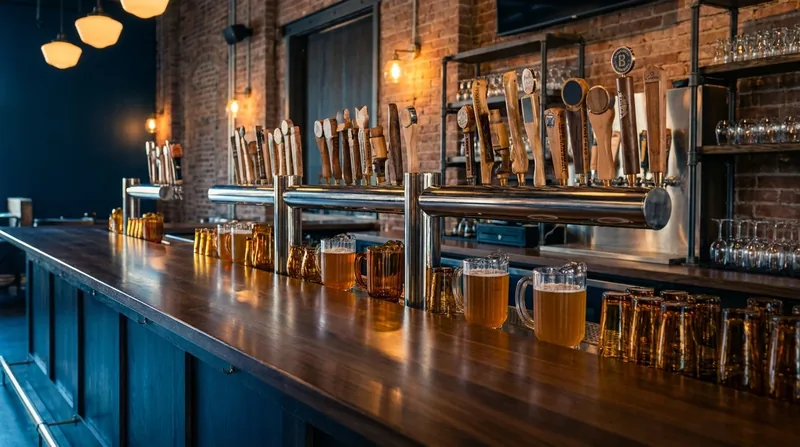
How to Start a Brewery, Winery or Distillery in Pennsylvania: PLCB Manufacturer Licenses
How to Start a Brewery, Winery or Distillery in Pennsylvania: PLCB Manufacturer Licenses
If you plan to make beer, wine, cider, mead or spirits in Pennsylvania, you will deal with two regulators. The Pennsylvania Liquor Control Board (PLCB) issues your state license, and the federal Alcohol and Tobacco Tax and Trade Bureau (TTB) issues the federal permits that cover production. Pennsylvania has no state general business license and no county business licenses, so the PLCB license is the approval that actually governs your production. This guide walks through the steps most new producers take, in the order that tends to save rework.
This article is informational content, not legal or tax advice. Alcohol licensing depends on details that change, so confirm every fee, deadline and requirement with the agency named before you commit money.
Choose the license that fits your product
Three PLCB manufacturer licenses are the ones new producers usually compare: the brewery license, the limited winery license and the limited distillery license. Your product type and the volume you expect in the first few years determine which one fits.
| License | What it covers | Production limit | Additional locations |
|---|---|---|---|
| Brewery | Beer | Confirm with the PLCB Bureau of Licensing | Confirm with the PLCB Bureau of Licensing |
| Limited winery | Wine, cider and mead | Under 200,000 gallons a year | Up to 5 board-approved additional locations, plus 2 storage locations |
| Limited distillery | Spirits | Up to 100,000 gallons a year | Up to 5 additional board-approved locations |
Choose based on what you will actually make, not on what you might make someday. A winery planning to make cider and mead alongside wine should confirm that the mix fits the limited winery license before filing. A distillery should check the 100,000 gallon ceiling against a realistic three-year production forecast. If your projected volume exceeds a limited license, talk with the PLCB and an attorney before you sign a lease, because a limited license will not cover that volume.
Gather what you need before you file
Most delays come from missing information, not from the agencies. Assemble these items before you start:
- A business name that meets Pennsylvania naming rules and is available on Department of State records
- Formation papers for your entity, either an LLC or a corporation
- A federal Employer Identification Number (EIN) from the IRS
- The street address of your production premises, and a registered office address in Pennsylvania if it is different
- Written confirmation from your municipality that the site allows manufacturing and any tasting or sales you plan
- A floor plan of the production area and any public area
- Personal information for every owner and officer, since the PLCB application will ask for it (confirm the exact list with the Bureau)
- A production plan with expected gallons per year, a product list and a distribution plan
- An equipment list with makers and capacities
- A budget for filing fees, using the verified figures in the steps below and confirming the PLCB amounts directly
Step 1: Form your business entity
Start with the Pennsylvania Department of State, Bureau of Corporations and Charitable Organizations. Check your proposed name at https://file.dos.pa.gov/search/business, then file online through Business Filing Services at https://file.dos.pa.gov/.
An LLC files a Certificate of Organization, Domestic Limited Liability Company (Form DSCB:15-8821), with a Docketing Statement (DSCB:15-134A). The filing fee is $125. The Bureau asks filers to allow about 15 business days for processing. Expedited service is available online or in person only, in addition to the $125 fee: same day service for filings received before 10:00 a.m. costs $100, 3 hour service for filings received before 2:00 p.m. costs $300, and 1 hour service for filings received before 4:00 p.m. costs $1,000.
A corporation files Articles of Incorporation, For Profit, with the same Docketing Statement, also at $125. A corporation must also advertise notice of its filing in two newspapers of general circulation, one preferably a legal journal, and keep proof of the publication in its minutes. An LLC has no publication requirement, which is one practical reason producers choose an LLC.
The name must include the term company, limited, or limited liability company, or an abbreviation of one of those terms. It cannot contain words that imply a business corporation, such as corporation or incorporated. If you need time to finish paperwork, you can reserve a name for 120 days for a $70 fee.
If you will sell under a brand name that differs from your entity name, register a fictitious name (DBA) on Registration of Fictitious Name (Form DSCB:54-311). The fee is $70, and you file it with the Department of State statewide, not with a county.
Step 2: Set your registered office
Pennsylvania does not use registered agents. Every filing entity must list a registered office address in Pennsylvania with a street and number. A post office box alone is not accepted. Most producers will have a physical Pennsylvania address because the brewery, winery or distillery itself occupies one. If you truly have no Pennsylvania address, a Commercial Registered Office Provider (CROP) under 15 Pa.C.S. section 109 may be an option, but a CROP cannot be used where a principal place of business is required, such as a fictitious name registration. Listing a CROP without a contract can carry civil and criminal penalties.
Step 3: Confirm zoning and lock down the site
Do not sign a lease or buy equipment until you have written confirmation from your municipality that manufacturing and any tasting room or sales use are allowed at the address. Zoning offices can tell you whether a conditional use approval or a hearing is required. Pennsylvania does not issue a general business license to cover this, so the local zoning answer is the one that matters for the site.
If you expect satellite tasting rooms or storage, plan for them now. Limited wineries may add up to 5 board-approved additional locations and 2 storage locations, and limited distilleries may add up to 5 additional board-approved locations. Ask the PLCB how to request those approvals, and whether they must be listed in the original application.
Step 4: Apply for federal TTB permits
The TTB process is separate from the PLCB and is federal. The permit class you need depends on what you make and how much. Contact TTB before you buy production equipment, because the permit terms affect how you can operate. Ask TTB which label approvals apply to your products, since labels for alcohol beverages follow federal rules. Ask the PLCB whether it needs your federal permit before it issues the state license, because that answer changes your filing order.
Step 5: File the PLCB application
Contact the PLCB Bureau of Licensing for the current application packet and fee schedule for your license type. PLCB filing and license fees differ by license type, and this guide does not state them, so confirm the current amounts with the Bureau before you budget. The application covers ownership, the premises and floor plan, and your production plan. Ask three questions when you call: what the processing time is right now, what you may do before approval (such as construction or equipment installation), and what happens if the premises or ownership changes during review.
Step 6: Register your state tax accounts
Pennsylvania retired Form PA-100 in 2022. Register your sales tax account and other state tax accounts through myPATH, using the Department of Revenue page at https://www.pa.gov/services/revenue/register-my-business-for-taxes. The state sales tax rate is 6 percent. Ask the Department of Revenue and the PLCB which alcohol-specific taxes, reports and remittances apply to your sales, because the answer depends on your license and sales channels.
Entity type drives income tax. An LLC taxed as a pass-through entity passes income to its owners, taxed at the flat 3.07 percent Personal Income Tax rate. An LLC taxed as a corporation pays the Corporate Net Income Tax, which is 7.49 percent for tax years beginning in 2026. Have a Pennsylvania CPA confirm your entity choice before you file.
Step 7: Plan carefully for ready-to-drink canned cocktails
Pennsylvania has permitted ready-to-drink (RTD) canned cocktails since 2024. Do not assume that a brewery, limited winery or limited distillery license automatically covers an RTD product line. Confirm with the PLCB whether your planned RTD product fits under your license, what production and sales rules apply, and what the federal TTB requirements are for that product. Do this before you design labels, order cans or promise a product launch.
Step 8: Check local and other permits
Pennsylvania has no county business licenses, but your municipality, the local health department and the fire marshal may each have requirements that apply to a production facility or a tasting room. Ask each office which approvals apply to your planned use. If you will serve food, ask the local health agency about food service requirements separately. Keep a written list of who you asked and what they told you.
Step 9: Calendar your recurring filings
Once you are operating, set reminders for these filings. LLC annual reports are required from January 1 through September 30 each year, filed online at file.dos.pa.gov, with a $7 fee. Corporation annual reports are due January 1 through June 30 each year, with a $7 fee. Nonprofit corporations pay no fee. The LLC annual report requirement began January 1, 2025. Confirm your PLCB renewal dates and reporting obligations with the Bureau, and track your myPATH tax filings in the same calendar.
Tips for a smoother filing
- Run the name search and the zoning question at the same time. A name you cannot use is cheap to change, but a site you cannot use is expensive.
- Write your production forecast in gallons, not in cases or barrels. The license limits are stated in gallons.
- Ask the PLCB and TTB the same question separately, then compare answers. If they conflict, get the conflict resolved in writing before you file.
- Ask the PLCB whether the agricultural side of your plan changes anything. Pennsylvania grows grapes and grain, and if you buy local fruit or grain, keep receipts and records that show where your inputs came from so you can answer questions quickly.
- Keep a single filing folder with every confirmation number, reviewer name and date. Most delays are easier to fix when you can show exactly what was submitted.
Common mistakes to avoid
- Looking for a county business license or a state general business license. Pennsylvania does not issue either one.
- Listing a post office box as the registered office. Pennsylvania requires a street address, or a properly contracted CROP.
- Using Inc. or Corporation in an LLC name. Those words are not allowed for an LLC.
- Signing a lease or ordering equipment before written zoning confirmation.
- Planning volume above the limited license ceiling. A limited winery is capped under 200,000 gallons a year, and a limited distillery is capped at 100,000 gallons a year.
- Assuming an RTD canned cocktail is covered by your existing license without confirming it.
- Forgetting the DBA. If your public brand name differs from your entity name, file the $70 fictitious name registration before you market under that name.
- Missing the annual report. Set the LLC deadline of September 30 and the corporation deadline of June 30 on your calendar the day you form.
Expected results
Completing these steps may put you in a position to begin production and sales once the required approvals are issued. Timing, cost and business outcomes depend on your site, your product mix, your entity type and the agencies' current workloads, and no specific result is guaranteed. Nothing in this guide makes a health claim about any beverage. Any statement you make about your product should be reviewed against the federal and state rules that apply to it before you publish it.
Disclaimer and next steps
This article is informational only and is not legal, tax or licensing advice. Alcohol licensing, entity formation and tax treatment depend on facts specific to your business. Before you file, consult a Pennsylvania attorney who handles alcohol licensing and a CPA who can review your entity and tax setup. Confirm all fees and timelines with the Pennsylvania Liquor Control Board, Bureau of Licensing, and with the federal Alcohol and Tobacco Tax and Trade Bureau. For entity filings, use the Pennsylvania Department of State at https://www.pa.gov/agencies/dos/programs/business, and for tax questions, use the Pennsylvania Department of Revenue at https://www.pa.gov/agencies/revenue.
Keep exploring: related Pennsylvania guides
- How to Start a Bakery Business in Pennsylvania
- How to Start a Catering Business in Pennsylvania
- How to Open a Restaurant in Pennsylvania
- How to Start a Coffee Shop Business in Pennsylvania
- How to Start an LLC in Pennsylvania
- Pennsylvania Business License
- How Much Does It Cost to Start a Business in Pennsylvania
- All Pennsylvania business types
- Every Pennsylvania guide in one place