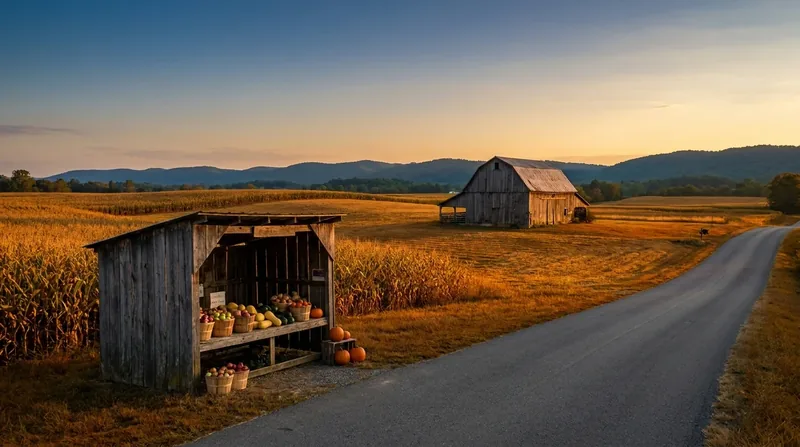
How to Start a Farm Business in Pennsylvania: Farm Stands, PDA Licenses and Clean and Green
How to Start a Farm Business in Pennsylvania: Farm Stands, PDA Licenses and Clean and Green
Starting a farm business in Pennsylvania is less about one big license and more about matching each product you sell to the right rule. A stand selling raw, unprocessed produce has very different requirements from a stand selling jam, raw milk or eggs. This guide puts the steps in order: choosing a business structure, registering with the state, sorting out Pennsylvania Department of Agriculture (PDA) rules by product, selling at farmers markets, applying for Clean and Green, and buying farm supplies tax-free. Pennsylvania has no general business license and no county business licenses, so the work is in the details.
This article is informational only. It is not legal, tax or regulatory advice. Confirm each item with the agency named before you spend money or sign anything.
What You Need Before You Start
Gather these items first. Having them ready keeps every filing moving.
- Your farm's legal name and a decision on structure: operating as yourself (a sole proprietor) or forming an LLC
- A physical street address in Pennsylvania for the registered office, if you form an LLC. A post office box alone is not accepted.
- Your deed or lease, and the parcel number for each tract from the county assessment office
- A map showing your acreage and which parcels are contiguous
- Proof that the land has been farmed for the prior 3 years, such as planting, sales or crop records
- A realistic estimate of your yearly gross farm income
- A written list of every product you plan to sell, sorted into raw produce, processed food, raw milk, eggs, other dairy and anything else
- Access to myPATH for state tax registration
- A federal Employer Identification Number from the IRS, if your structure or staffing requires one (confirm with your CPA)
Step 1: Choose Your Business Structure
You can run a farm as a sole proprietorship without filing anything with the state to create the business. Many small farms start this way. If you want liability separation from the farm operation, or you are bringing in partners, an LLC is the common choice. Ask a CPA which structure fits your tax situation.
To form an LLC, file a Certificate of Organization, Domestic Limited Liability Company (Form DSCB:15-8821) with a Docketing Statement (DSCB:15-134A) through Business Filing Services at file.dos.pa.gov. The key facts:
- Filing fee: $125
- Processing: The Bureau of Corporations and Charitable Organizations asks filers to allow about 15 business days. Expedited service is available for an added fee, online or in person only, and not by mail. Expedited options are $100 for same day service (received before 10:00 a.m.), $300 for 3 hour service (received before 2:00 p.m.) and $1,000 for 1 hour service (received before 4:00 p.m.).
- Name: The name must contain company, limited, limited liability company, or an abbreviation of one of those terms, such as Hollow Creek Farm, LLC. It may not include words implying a business corporation, such as corporation or incorporated. It must be distinguishable from names already on file with the Department of State, unless the prior holder files a Consent to Appropriation of Name (DSCB:19-17.2).
- Registered office: Pennsylvania does not use registered agents. You list a registered office address in Pennsylvania with a street and number. If the business has no Pennsylvania address, it may contract with a Commercial Registered Office Provider (CROP) under 15 Pa.C.S. section 109 and list the CROP name and county of venue instead. Listing a CROP without a contract can carry civil and criminal penalties.
- Publication: LLCs have no publication requirement.
- Annual report: $7, filed online at file.dos.pa.gov each year between January 1 and September 30. This requirement began January 1, 2025.
On tax, Pennsylvania has no LLC franchise tax and no separate LLC annual tax. A standard LLC is taxed the same way as its federal classification. Pass-through income goes to the owners at the flat 3.07% Personal Income Tax rate. An LLC taxed as a corporation pays the Corporate Net Income Tax, which is 7.49% for tax years beginning in 2026.
Step 2: Register a Trade Name if You Sell Under a Different Name
If you sell as Ridgeview Orchards but your legal name is different, you need a fictitious name registration. The Registration of Fictitious Name (Form DSCB:54-311) costs $70 and is filed statewide with the Pennsylvania Department of State's Bureau of Corporations and Charitable Organizations, not with your county. Find the form and instructions at the Pennsylvania fictitious names page. Use the same name on your signage, invoices, market applications and bank account.
Step 3: Register for State Taxes in myPATH
The PA-100 registration form was retired in 2022. Tax registration now happens in myPATH. If you will collect sales tax, register for a Sales, Use and Hotel Occupancy Tax License there. The state sales tax rate is 6%. Start at the Department of Revenue registration page, and ask the Department of Revenue which of your products are taxable before you open the stand.
Step 4: Sort Each Product Under the Right PDA Rule
This is the step most farms get wrong. Because Pennsylvania has no general business license, PDA rules decide whether you can sell a given product and what you must do to sell it. Use the table below as a starting point, then confirm with the Pennsylvania Department of Agriculture (search pa.gov for the agency) before you list the product.
| Product | Rule | Your next step |
|---|---|---|
| Raw, unprocessed produce such as fresh fruit and vegetables | Raw produce stands need no food license. | Keep the product whole and unprocessed. Re-check the rules if you start cutting, packaging or processing anything. |
| Processed foods such as jams, baked goods, sauces or cider | Need PDA licensing: a limited food establishment or retail food license. | Ask PDA which license fits your operation before you sell. |
| Raw milk or raw milk butter for human consumption | Needs a PDA raw milk permit. The permit carries no permit fee. The permit holder pays for testing twice a month and pathogen testing every 6 months. | Budget for the testing schedule before you apply. |
| Eggs | Check with PDA. | Ask PDA whether your egg sales need a license and what handling and labeling rules apply. |
| Other dairy products | Check with PDA. | Ask PDA which licenses and rules apply to each dairy product you plan to sell. |
Raw Milk Permit Details
A PDA raw milk permit is required before you sell raw milk or raw milk butter for human consumption. The permit itself has no permit fee, but the testing is your cost. Plan for twice-monthly testing and pathogen testing every 6 months, and keep your testing and handling records ready for inspection. Describe the product by what it is and how it is handled, not by health outcomes, in your signage and marketing.
Eggs and other dairy products are a different case. Do not assume a product is exempt or that it needs a license. Get PDA's answer in writing before you list the item for sale.
Step 5: Set Up the Farm Stand
A roadside stand selling raw produce has few state licensing requirements, but it still faces local rules. Pennsylvania has no county business licenses, so zoning, signage, parking and setback questions go to your township or borough office. Ask before you build or post a sign. Cover these questions:
- Whether a farm stand is a permitted use on your parcel
- Sign size and placement
- Parking and road access, especially on a busy road
- Whether the stand may operate year-round or only during the growing season
If you sell any processed items at the stand, the PDA rule for those items still applies, even though your raw produce does not need a food license.
Step 6: Sell at a Farmers Market
Farmers markets set their own vendor rules, so there is no single statewide farmers market vendor license to apply for. Ask each market manager for the written vendor rules and whether the market requires proof of your PDA license, your sales tax registration or any insurance documents before you apply. Be accurate about what you carry. Raw produce, processed goods and raw milk products are handled under different rules, and markets will want to know which ones you sell.
Step 7: Apply for Clean and Green
Clean and Green is Pennsylvania's preferential assessment program for qualifying land. You apply through your county assessment office, not the state. For agricultural use, the land generally needs to meet one of these tests and the farming history below:
- 10 or more contiguous acres, or fewer acres if you anticipate at least $2,000 in yearly gross farm income
- Farmed during the prior 3 years
Take these steps:
- Call your county assessment office and ask for the Clean and Green application and its filing deadline.
- Gather your parcel numbers, acreage map and farm income estimate.
- Document three years of farming activity with planting, sales or crop records.
- File the application and keep a copy with your business records.
Understand the tradeoff before you apply. Clean and Green lowers the assessed value of qualifying land, but if the land later leaves the program, rollback taxes can apply. Before you sell or change the use of the property, ask the assessment office what a rollback would cost. Confirm the figures with your county and a CPA.
Step 8: Buy Farm Supplies Tax-Free
Farm-use purchases can be exempt from sales tax when you give the seller the REV-1220 exemption certificate. You do not need a sales tax license to use the certificate for those purchases. Use it only for qualifying farm use, not for personal items. Keep a copy of each certificate with your purchase records, and confirm what qualifies with the Department of Revenue.
Pennsylvania Specialties
Pennsylvania is known for dairy, Christmas trees and mushrooms, and Chester County is a well-known mushroom-growing area. If you farm one of these, the steps above still apply, but ask PDA about the rules for your specialty before you plant, build or buy equipment.
Common Mistakes to Avoid
- Looking for a general business license or a county license. Pennsylvania has neither.
- Looking for a registered agent. Pennsylvania uses a registered office with a street and number. A post office box is not accepted.
- Filing a PA-100. That form was retired in 2022. Register in myPATH.
- Selling jam, cider or baked goods under the raw produce rule. Processed foods need PDA licensing.
- Selling raw milk without a PDA raw milk permit, or without budgeting for the required testing.
- Missing the LLC annual report. It is $7 and due by September 30 each year.
- Assuming all farmland qualifies for Clean and Green. Check the acreage, income and 3 year farming history first.
- Forgetting rollback exposure when you consider selling or changing the use of a Clean and Green parcel.
- Using the REV-1220 certificate for personal purchases.
- Assuming an LLC must publish a notice. Pennsylvania LLCs have no publication requirement.
What Results to Expect
Most farms open their stand or market booth in stages, and the timeline depends mostly on how quickly you finish the PDA and local zoning questions. An LLC filing may take about 15 business days to process. Clean and Green timing depends on your county, so ask for the deadline early.
Clear labeling, accurate product descriptions and organized records may help you answer customer questions and inspector requests. Many shoppers look for locally grown produce, and a well-run stand may help build repeat buyers. Results depend on location, product mix and season, and this guide does not promise sales, savings or approvals.
Next Steps and Where to Get Help
The Pennsylvania Small Business Development Centers at pasbdc.org offer business advising for new and growing companies. For the PDA questions, the raw milk permit and any entity or tax decision, consult a qualified attorney or CPA who works with agricultural businesses.
Disclaimer: This article is informational only. It is not legal, tax or regulatory advice. Requirements, fees and deadlines change, so confirm every item with the named agency before you act. For complex situations, consult a qualified attorney or CPA.
Keep exploring: related Pennsylvania guides
- How to Start a Dog Kennel, Boarding or Breeding Business in Pennsylvania
- How to Start a Campground or RV Park in Pennsylvania
- How to Start an LLC in Pennsylvania
- Pennsylvania Business License
- How Much Does It Cost to Start a Business in Pennsylvania
- All Pennsylvania business types
- Every Pennsylvania guide in one place